
2024 IMPACT REPORT
PRODUCT.

ECO-DESIGN, OUR PRIORITY
Circularity, sustainability, life cycle, eco-design, eco-design… Since the creation of Circle, these issues have been at the heart of our decisions. In each of our creations, the design, choice of materials and end-of-life optimization are designed to meet the main principles of eco-design and more broadly eco-design. What is eco-design? The eco-design process is a process which takes into account environmental aspects from the design of the product and during all stages of its life cycle, in order to create a product whose impact on the environment is the greatest. low possible.
How does this eco-design process work? A triple objective, circularity, performance and desirability!
LESS BUT BETTER
A minimalist design so that each material provides real benefit, both technical and environmental. But also, the desire to offer a design which highlights these natural materials and which allows each material to be identified and separated at the end of its life. We always seek to maximize the use of our materials for multiple uses to minimize the number of total materials used. For example, our bras are lined with materials adapted from our Iconic t-shirts.
CHOICE OF RAW MATERIALS
Favor the use of materials from natural or recycled resources. From the product design stage, we select materials with low environmental impact. The objective: to meet demanding specifications in terms of performance, quality and ethics. For each material, we analyze and trace the origin of each thread, checking the certifications to ensure that it meets our specifications. We also very often create materials because there are no sufficiently local, natural or recycled and efficient solutions on the market. It's a long process of +18 months, we make no concessions on the quality and durability of our materials.
RECYCLING FIRST
Imagine what the product will become at the end of its life and not just what it will look like at the time of sale. This is the philosophy in which we place ourselves in the creation of each product. Anticipating the durability and end of life of the product from the earliest stages of its design to ensure a low-impact end-of-life plan is essential. We therefore work with several partners with whom we test and analyze each product to test and guarantee durability during development. Finally, the most eco-responsible products are those that last as long as possible. We therefore offer a repair service to extend the life of our clothes.
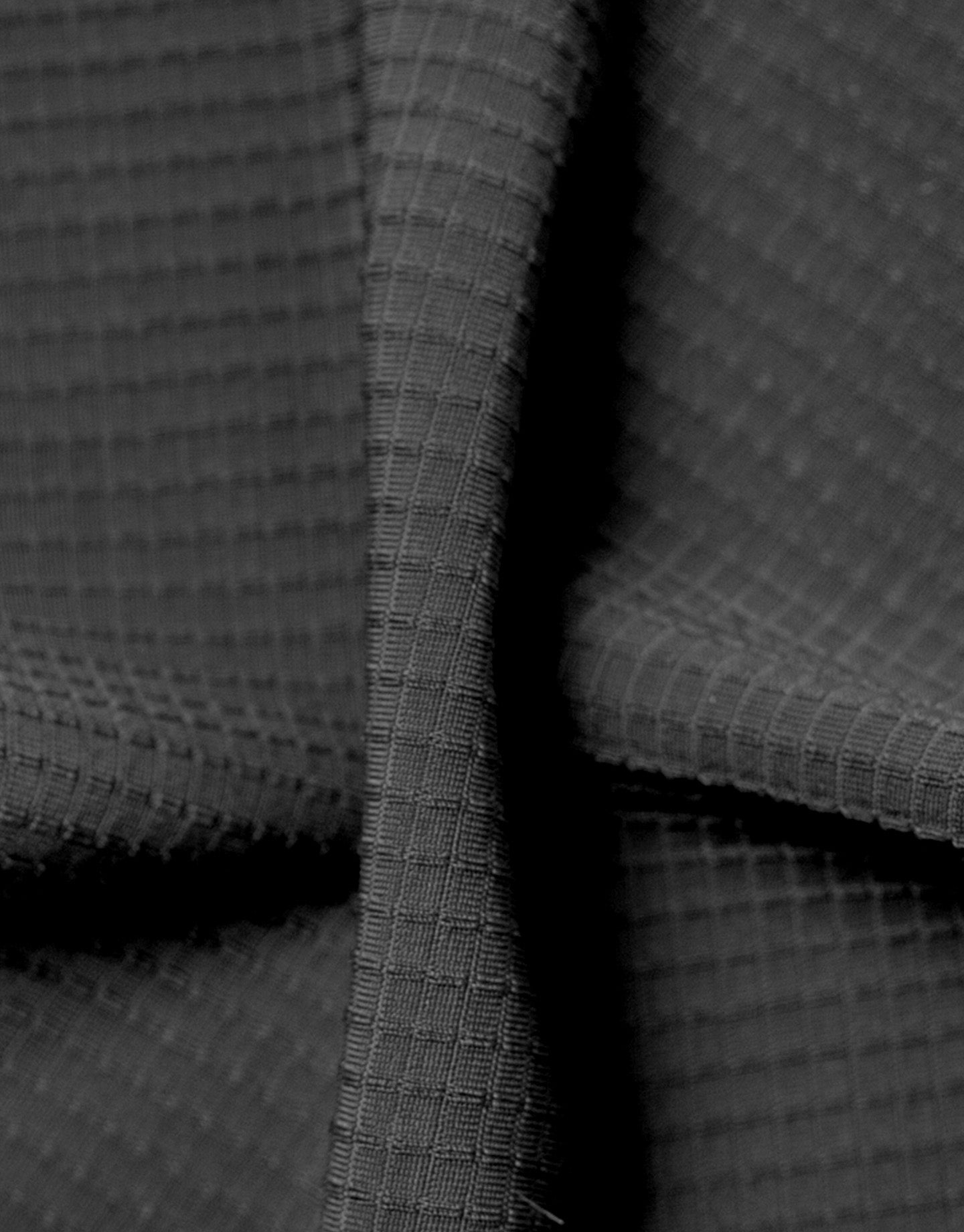
OUR MATERIALS
Q-NOVA® RECYCLED POLYAMIDE
Recycled polyamide is a recycled synthetic filament, made 100% from pre-consumer nylon waste collected and transformed directly in yarn manufacturing factories in Italy.
The yarn and dye are Oeko tex Standard 100 / Reach / GRS / LCA certified by ICEA.
Environmental impact - Figures in comparison with virgin (non-recycled) polyamide
- - 80% CO2 emissions
- - 90% water consumption
- Mechanical transformation process, no chemicals harmful to humans and the environment
NEWLIFE™ RECYCLED POLYESTER
Recycled polyester is a recycled synthetic filament. It comes 100% from transparent post-consumer plastic bottles, collected in garbage dumpsters 40 km around Turin then mechanically recycled and extruded in Biella in Italy. The yarn and dye are Oeko tex Standard 100 / Reach / GRS / LCA certified by ICEA.
Environmental impact - Figures in comparison with virgin polyester (non-recycled)
- 25 tonnes harvested/h
- - 60% energy consumption
- - 32% CO2 emissions
- - 94% water consumption
- Mechanical transformation process, no chemicals harmful to humans and the environment
IMPACT OF OUR MATERIALS
0 %
Made in Europe
All of our products are manufactured locally by our partners in Europe.
0 %
From recycled materials
On average for our products made from recycled materials.
0 %
From materials of natural origin
On average for our products made from materials of natural origin.
0 %
Recyclable and/or biodegradable
All of our products are recyclable and/or biodegradable at the end of their life.
2024 IMPACT REPORT
INNOVATION
At Circle, innovation serves a clear purpose: making circularity accessible to everyone.
Alongside our trusted partners, our technical team continuously explores new materials, lighter, stronger, more breathable, and either recycled or bio-based, to design durable, high-performance running gear without compromise.
Q-CYCLE®: Recycled Polyamide
Born from a collaboration with BASF, a specialist in chemical recycling, and Fulgar, an Italian spinner committed to sustainable innovation, Q-CYCLE® is a fiber made from post-consumer recycling.
Produced from used tires transformed through pyrolysis in Germany, a process that gives value to a complex waste material that is usually incinerated, this fiber embodies our commitment to combining technical performance with responsibility.
Used in our Active and Legend shorts, as well as our Agility Run and Run Track t-shirts, Q-CYCLE® offers:
- excellent resistance and durability,
- remarkable mechanical strength,
- optimal color fastness,
all while significantly reducing the environmental impact of the fiber.
NANOTECH™: Advanced Textile Technology
Developed with Schoeller Textil AG, a European pioneer in sustainable textiles, NanoTech™ is an ultra-lightweight fabric (less than 70 g for a t-shirt) that offers a second-skin feel, making it ideal for running. Its technical properties include:
- protection against irritation,
- ultra-fast drying to reduce the wet feeling,
- excellent odor management,
- optimal stretch and high resistance to abrasion,
- enhanced UV protection thanks to Coldblack® technology, which limits heat absorption.
2024 IMPACT REPORT
Traceability and Transparency
"In 2024, we conducted a comprehensive carbon assessment to measure the impact of our activity across our entire value chain.This approach allows us to identify our main sources of emissions and take concrete action to reduce them. It is part of our goal to achieve carbon neutrality by 2030, with reduction at the core of our environmental strategy."
_
Emilie Hertaut
Head of Production
Article 13 of the AGEC law mandates that by 2026, certain environmental characteristics of products must be displayed to inform the public.
Although this law does not yet apply to small businesses, our commitment to sustainability is at the heart of everything we do.
By choosing to collaborate with Fairly Made to conduct Life Cycle Assessments (LCAs) on our garments — a method used to quantify the environmental impact of a product or service — we analyzed all our different materials to evaluate each of our products, ensuring complete traceability verified by a third party.
Thanks to this analysis, we are able to offer our community full transparency regarding our supply chain and its impact.
OUR KEY FIGURES
0 %
Products Analyzed (2024)
With its AVC method, Fairly Made analyzed 100% of the materials we use in our different collections.
0
Recyclability
Rating given by Fairly Made after analysis of the recycling capacity of our products.
0
Impact Score (B Corp): 96.1/200
The eco-score or PEF (Product Environmental Footprint) awarded by Fairly Made which aims to assess the environmental impacts of our products throughout their life cycle.
2024 IMPACT REPORT

CERTIFICATIONS
In our quest for transparent and sustainable practices, the certifications of our partners play a central role in guaranteeing the integrity of each stage of the production of our clothing: the cultivation and transformation of the raw material into yarn, the dyeing process or even the making. These certifications cover different aspects of environmental and social responsibility, shaping a holistic view of our operations.
Oeko-Tex Standard 100 - This certification ensures that the final fabric, dyes and finishes are free of substances harmful to our health. It takes into account a wide range of regulated and unregulated substances, including pesticides, carcinogenic dyes and heavy metals.
GRS - Global Recycled Standard - GRS certification measures and certifies the percentage of recycled materials in the fabric (a minimum of 50%) as well as compliance with various environmental and social criteria. Companies must comply with and monitor legal requirements regarding water consumption, energy consumption and greenhouse gas production. It is prohibited to burn waste on site, and legal wastewater regulations must be followed, with a dedicated system for treating wastewater before it is released into waterways. GRS also certifies the prohibition of forced and child labor, discrimination, harassment and abuse, while ensuring worker health and safety, wages, working hours and various social aspects .
Cradle to Cradle Gold Level - With this certification, products are assessed for their environmental and social performance in five critical sustainability categories: health, material reuse, renewable energy management and carbon management, water and social equity. The health category guarantees the absence of harmful substances in the manufacturing of products. Material reuse aims to eliminate the concept of waste by helping to keep products in perpetual cycles of use and reuse. The renewable energy category ensures manufacturing using renewable energy sources. Finally, water management aims to improve the protection of watersheds. The objective of these categories is to certify all of the operations necessary for the manufacture of a product.
Bluesign - This certification guarantees the absence of toxic substances for humans and the environment, optimization of resources and waste management. It meets environmental requirements with a focus on resource efficiency in production and manufacturing, waste treatment, controlled water consumption, chemical use and CO2 emissions. When it comes to social standards, Bluesign certifies the prohibition of forced and child labor, worker health and safety, and gender equality.
Reach - is a standard that controls the use of chemical substances in European industry. The objective is to identify, evaluate and control chemical substances manufactured, imported and placed on the European market.
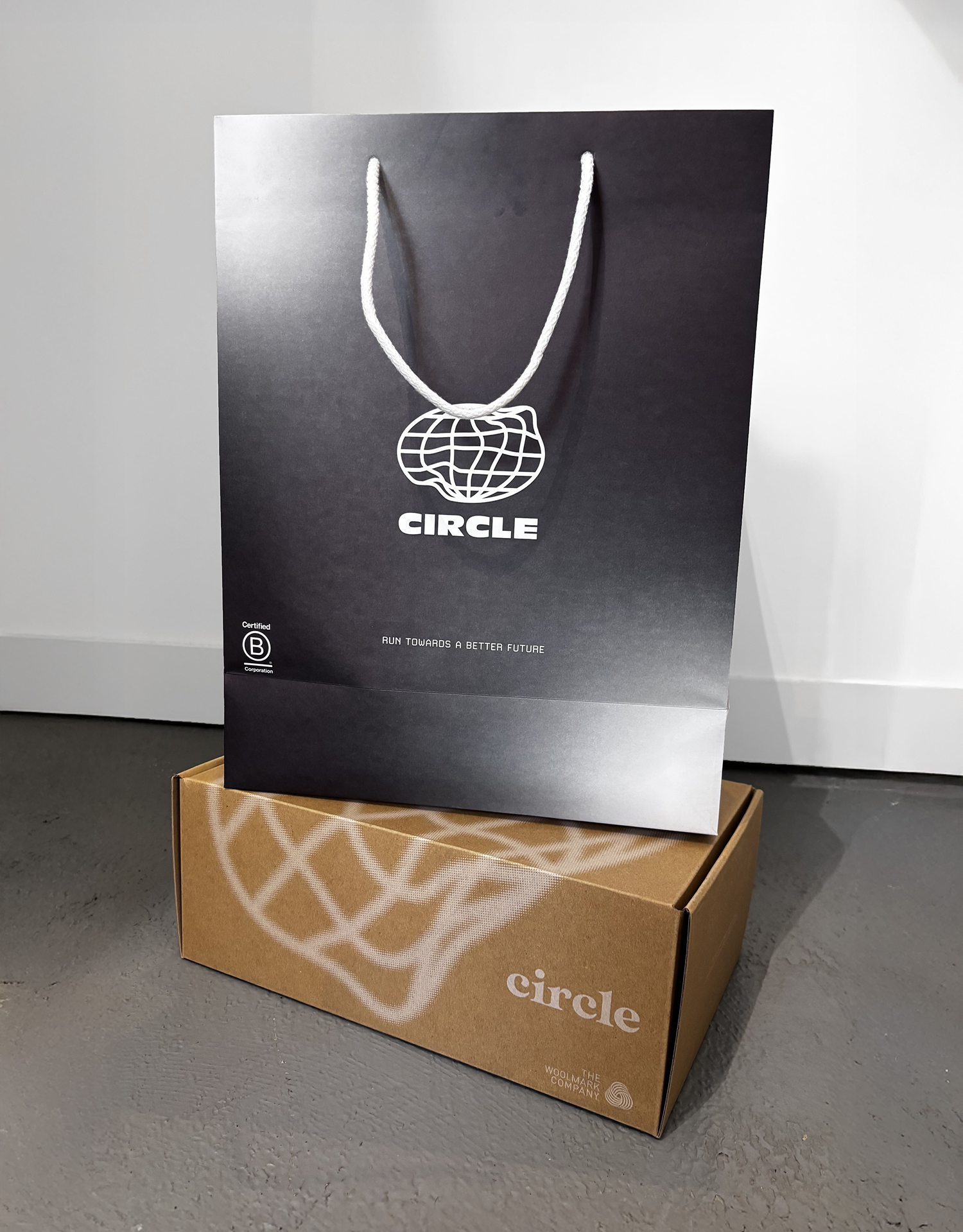
RESPONSIBLE PACKAGING
Since the creation of Circle Sportswear, we have been committed to the search for low carbon impact solutions and not only on our products. Circle packaging meets our requirements for quality and sustainability, while minimizing their impact.
LOW CARBON IMPACT AND RECYCLABILITY
We strongly believe in using recycled materials to reduce our environmental footprint. Our packaging is entirely recyclable, designed in Europe and made from craft, a natural material. This carefully chosen approach helps minimize our impact on the environment while ensuring the highest quality packaging.
LOCAL PACKAGING
Our commitment to environmentally friendly practices is also reflected in our choice of partners and local provenance. We favor Portugal and France for our packaging, thus considerably reducing our carbon footprint. Our trusted partners, such as Cadica in Italy and Open Eyes in Poland, share our commitment to sustainable solutions.
A DUAL-USE PACKAGING
We believe that each packaging is an opportunity to share our values and our commitment to the environment. This is why we design our packaging for dual use, going beyond its simple function. Each packaging is a communication medium, transmitting a message that reflects our commitments to sustainability.
By adhering to these criteria, we are confident that our packaging will significantly contribute to our sustainability mission, while providing a meaningful brand experience for our customers.
THE MOST ECO-RESPONSIBLE PRODUCT IS THE ONE THAT LASTS THE LONGEST POSSIBLE.
2024 IMPACT REPORT

BACK TO THE FUTURE
OUR COMMITMENT TO CIRCULARITY
The end of a product’s life is one of the most important levers of circularity.
When you consider that each year the equivalent weight of 13 Eiffel Towers ends up in the trash, it became clear we needed to find a solution. Our goal is to minimize waste created by overconsumption. With our Back To The Future program, you can find the best solution based on your situation: customization, repair, or recycling!
How does this program work? What happens to the garments once we receive them?
As soon as we receive your product, our technical team evaluates it to determine the best alternative. We offer our customers three distinct solutions to address the different stages in the life cycle of our products.
THE REPAIR
Our ambition is to make our products last as long as possible, for you and for the planet. If a product is damaged but repairable, we promise to restore it to extend its life. We have established a partnership with Tilli Paris, a network of 500 expert craftsmen, to set up a complete repair process for all of our products. We have tested and collaborate with carefully selected tailors, all equipped with technical machines suitable for repairing our high-performance products.
How does it work in practice?
- To make a request, go tohttps://circlesportswear.com/pages/reparation-et-interview
- A questionnaire is available to collect everyone's needs
- We offer the best solution for the product. If a repair is necessary, we take care of the entire process to offer a lifetime warranty on all Circle products.
In 2024, we have already responded to 14 repair requests.
THE RECYCLING
Recycling being an energy-intensive process, it will only arrive as a final solution, if the garment cannot be repaired or upcycled.
Recycling, how does it work?
Each product is tested to determine its recyclable potential. If the material has not lost its strength and performance, our partner transforms it into yarn to make new fabrics. On the contrary, if it cannot be reused, new objects or accessories will be manufactured.

Follow our adventures
Join our newsletter to stay up-to-date with our upcoming events, latest product drops, and environmental news.